Arthurs Seat
Visited Arthus Seat last week in the late afternoon. Was nice.
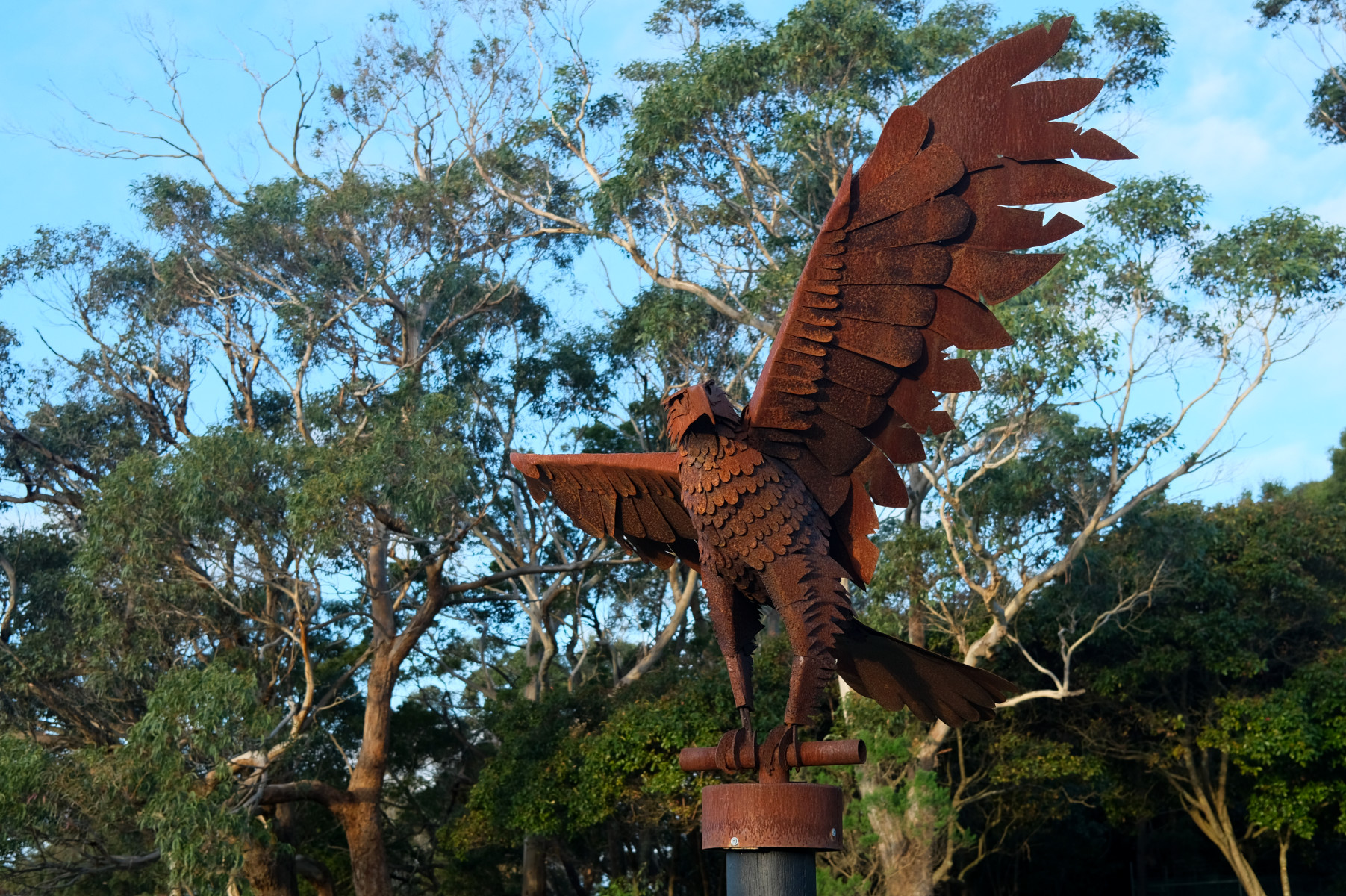





Visited Arthus Seat last week in the late afternoon. Was nice.
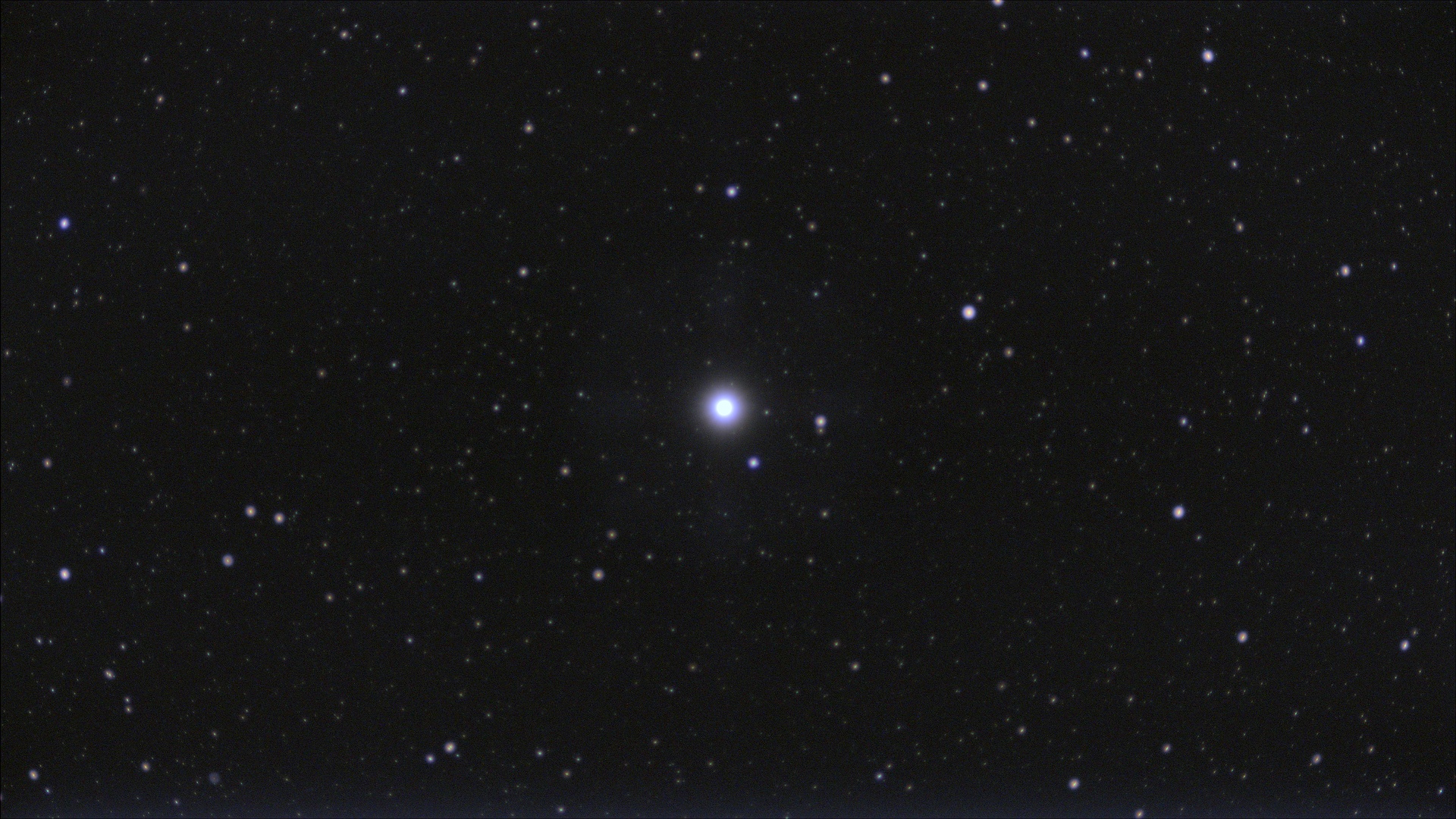
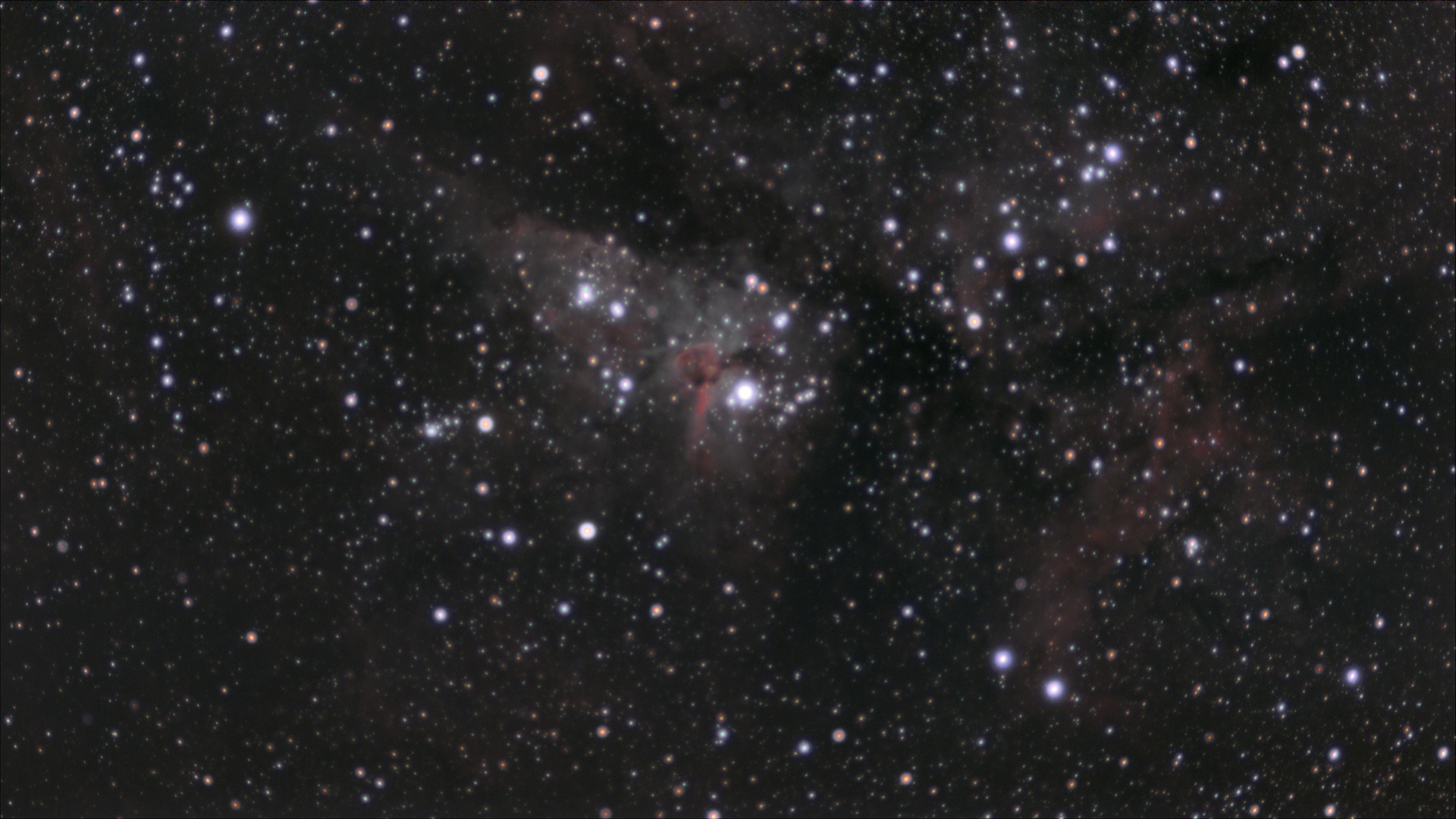
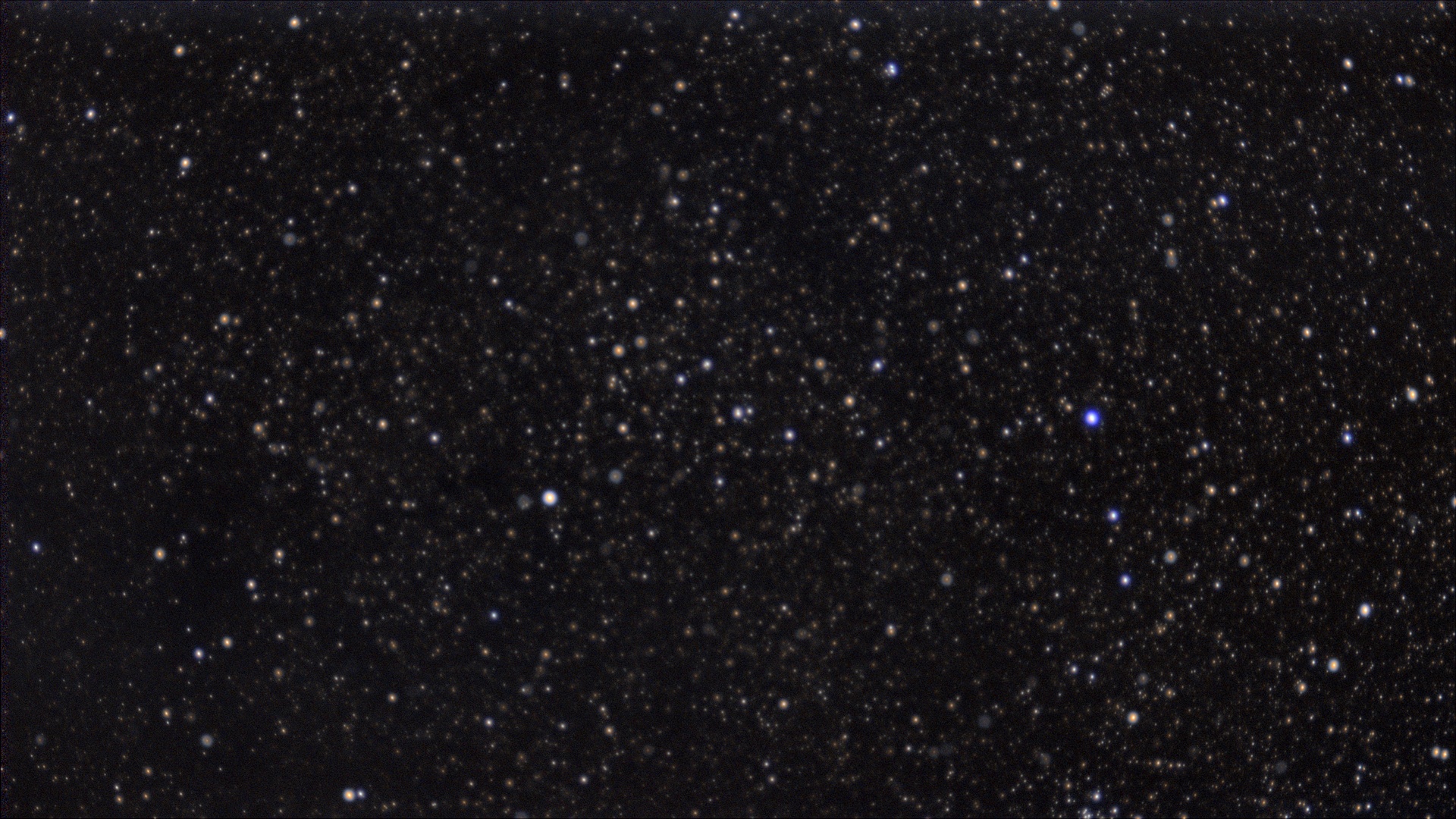
I’ve start learning about Electronically Assisted Astronomy (EAA). I’ve only gone out a few times, and while I barely know what I’m doing, it’s been a nice way to spend a few hours outside at night.
I’m using a ASI485MC camera, with an Amazon 70mm doublet refractor, a AZI-Gti Goto Mount, and EQ Adapter (from the Star Adventurer).
Tonight was the first time using the mount in EQ mode and it took a couple of hours to get the process sorted. In the end I managed a 2-minute-of-angle alignment, resulting in tracking, goto, and plate solving all working with zero issues. With luck, next time will be a lot quicker.
While I’m going to claim it’s EAA, and not astrophotography, I still had to process the images a little in Siril. No darks, no flats, under garden lights and a Bortle 7 sky.
I’m pretty sure I’m overexposing everything, but blue channel in-particular is super overexposed and blurry. As I’m using a color camera, I think a IR filter will help… Maybe… Who knows.
Short audio sample of typing on my Keychron K2v2 with Boba U4T switches, and MA Blue Cat keycaps.
I’m way too old for newfangled mech keyboards. This setup is pleasant enough to type on and does sound quite nice to me. But overall is too tactile for my taste.
I also did not realise the Keychron had dropped any future support of remapping the keys on their wireless models when I purchased the K2v2 which was quite disappointing.
I’ve been really bored recently. So I’ve been looking to see how many FM stations I could find.
Equipment is AirSpy HF+ Discovery, SDRSharp, and a Discone Antenna mounted ~2m above the ground.
The websites FM Scan and VHF Propagation Map have been very useful for identifying stations, and finding good times to listen.
Furthest station was ABC Classic in Griffith NSW. Bit over 400KM away.
Updated 2021-09-22: Added a couple of new entries, included basic signal quality, and updated code.
| Frequency | Station Name | Signal |
|---|---|---|
| 87.6 Mhz | Surf FM | Medium |
| 87.8 Mhz | Kiss FM | Medium |
| 88 Mhz | DCFM 88.0 | Low |
| 88.1 Mhz | 3MFM | Medium |
| 88.3 Mhz | Southern FM | Medium |
| 88.5 Mhz | ABC Northen Tasmania | DX |
| 88.6 Mhz | Plenty Valley FM | Medium |
| 88.7 Mhz | Vision Radio Bendigo | Very low |
| 88.9 Mhz | WynFM | Medium |
| 89 Mhz | Radio Bayside | Low |
| 89.1 Mhz | 3MFM | Medium |
| 89.3 Mhz | Kix Country Radio | Medium |
| 89.5 Mhz | Very low | |
| 89.7 Mhz | ABC Radio National Willis Hill Tas | DX |
| 89.9 Mhz | Light899 | High |
| 90.3 Mhz | TripleJ | Low |
| 90.7 Mhz | SYN FM | High |
| 90.9 Mhz | TripleJ Tasmania | DX |
| 91.1 Mhz | ABC Central Victoria | Low |
| 91.3 Mhz | ABC News Radio Warrnambool | DX |
| 91.5 Mhz | Smooth FM | High |
| 91.7 Mhz | ABC Northern Tasmania | DX |
| 91.9 Mhz | SEN Track | Low |
| 92.1 Mhz | ABC Classic Warrnambool | Very low |
| 92.3 Mhz | 3ZZZ | High |
| 92.5 Mhz | Radio National Somwhere | Medium |
| 92.7 Mhz | ANC Classic Bendigo | Medium |
| 92.9 Mhz | Low | |
| 93.1 Mhz | SBSRadio | High |
| 93.3 Mhz | ABC Classic | DX |
| 93.5 Mhz | Vision Australia Radio | High |
| 93.7 Mhz | Very low | |
| 93.9 Mhz | Bay939 | Medium |
| 94.1 Mhz | 3WBC | Medium |
| 94.3 Mhz | TripleM Gippsland | High |
| 94.5 Mhz | Very low | |
| 94.7 Mhz | The Pulse | Medium |
| 94.9 Mhz | Joy94.9 | High |
| 95.1 Mhz | ABC News Radio | High |
| 95.3 Mhz | Triple M Goulburn Valley | DX |
| 95.5 Mhz | K-ROCK | Medium |
| 95.7 Mhz | Golden Days Radio | Medium |
| 96.1 Mhz | ABC Radio National | Medium |
| 96.3 Mhz | 96three | Medium |
| 96.5 Mhz | Inner FM | Medium |
| 96.7 Mhz | Triple J | Medium |
| 96.9 Mhz | Medium | |
| 97.1 Mhz | 3MDR | High |
| 97.3 Mhz | ABC Clasic Griffith NSW | Low |
| 97.7 Mhz | 3SER Casey Radio | High |
| 97.9 Mhz | 979fm | Medium |
| 98.1 Mhz | Radio Eastern FM | High |
| 98.3 Mhz | RPP FM | High |
| 98.5 Mhz | Apple 98.5 FM | Medium |
| 98.7 Mhz | RPP FM | High |
| 98.9 Mhz | Very low | |
| 99.1 Mhz | Yarra Valley FM | Low |
| 99.3 Mhz | 3NRG | Medium |
| 99.5 Mhz | TRFM | Medium |
| 99.7 Mhz | ABC Radio National | Very low |
| 100.1 Mhz | Vision Australia Radio Shepparton | DX |
| 100.3 Mhz | Nova100 | High |
| 100.5 Mhz | Very low | |
| 100.7 Mhz | ABC Gippsland | High |
| 101.1 Mhz | KIIS 101.1 | High |
| 101.5 Mhz | ABC Classic | High |
| 101.7 Mhz | ABC Radio National Warrnambool | DX |
| 101.9 Mhz | The Fox | High |
| 102.1 Mhz | ABC Mildura Swan Hill / Goschen | Very low |
| 102.3 Mhz | 3BA | Medium |
| 102.7 Mhz | Triple R | High |
| 103.1 Mhz | Power FM | Medium |
| 103.3 Mhz | DX | |
| 103.5 Mhz | 3MBS | High |
| 103.7 Mhz | ABC Classic Goschen / Swam Hill | DX |
| 103.9 Mhz | Life FM Gippsland | Medium |
| 104.3 Mhz | Gold 104.3 | High |
| 104.7 Mhz | Very low | |
| 105.1 Mhz | Triple M | High |
| 105.5 Mhz | ABC Classic FM Ballarat | Low |
| 105.9 Mhz | ABC Classic FM | High |
| 106.3 Mhz | Flow FM | Medium |
| 106.5 Mhz | Very low | |
| 106.7 Mhz | PBS | High |
| 106.9 Mhz | Very low | |
| 107.1 Mhz | Triple J | Low |
| 107.5 Mhz | Triple J | High |
| 107.9 Mhz | ABC Ballarat | Low |
Note: All stations were positively identified.
I need a bigger backyard so I can put up a big FM antenna…
Wow, it’s been a long time since I wrote any code. First program in Deno/Typescript to help convert the SDRSharp frequencies file to a markdown table.
// I'm too stupid to use this library
// import { parse } from "https://deno.land/x/xml/mod.ts";

// So let's pretend the xml might be terabytes in size and use a SAX library
import { SAXParser } from 'https://deno.land/x/xmlp/mod.ts';


class SignalQuality {
    protected _snr: number = 0;
    protected _isDx: boolean = false;

    set snr(value: number) {
        this._snr = value;
    }

    get snr() : number {
        return this._snr;
    }

    set isDx(value: boolean) {
        this._isDx = value;
    }

    get isDx() : boolean {
        return this._isDx;
    }

    protected textMap() : [string, string] {
        if(this._isDx) {
            return ['DX', 'orangered'];
        }
        else if(this._snr < 5)
        {
            return ['Very low', 'grey'];
        }
        else if(this._snr < 10)
        {
            return ['Low', 'grey'];
        }
        else if(this._snr < 30)
        {
            return ['Medium', '#ddd'];
        }
        else
        {
            return ['High', 'green'];
        }
    }

    public formattedText() : string {
        return this.textMap()[0];
    }

    public formattedTextColor() : string {
        return this.textMap()[1];
    }
}

class MemoryEntry {
    public name: string = '';
    public frequency: number = 0;
    public notes: string = '';
    public signal: SignalQuality = new SignalQuality();

    public formattedFrequency() : string {
        return (this.frequency / (1000 * 1000)) + ' Mhz';
    }
}

async function parseFrequenciesXml(filename: string) : Promise<MemoryEntry[]>
{
    let entries = [] as MemoryEntry[];
    let currentEntry: MemoryEntry;

    let currentElement = {
        Name: false,
        Frequency: false,
        extraSNR: false,
        extraDX: false,
        extraNotes: false
    } as { [key: string]: boolean; };

    const parser = new SAXParser();

    parser.on('start_element', (el) => {
        if(el.qName == 'MemoryEntry') {
            currentEntry = new MemoryEntry();
        }
        else {
            currentElement[el.qName] = true;
        }
    }).on('end_element', (el) => {
        if(el.qName == 'MemoryEntry') {
            entries.push(currentEntry);
        }
        else {
            currentElement[el.qName] = false;
        }
    }).on('text', (s) => {
        if(currentElement['Name']) {
            currentEntry.name = s;
        }
        else if(currentElement['Frequency']) {
            currentEntry.frequency = Number(s);
        }
        if(currentElement['extraSNR']) {
            currentEntry.signal.snr = Number(s);
        }
        if(currentElement['extraDX']) {
            currentEntry.signal.isDx = (s === 'true')
        }
        if(currentElement['extraNotes']) {
            currentEntry.notes = s;
        }
    });

    // run parser, input source is Deno.Reader or Uint8Array or string
    const reader = await Deno.open(filename);
    await parser.parse(reader);
    reader.close();

    return entries;
}

let filename = "./frequencies.xml";

if(Deno.args.length == 1) {
    filename = Deno.args[0];
}

console.log(`Reading from ${filename}`);

const desc1 = { name: "read", path: filename } as const;
const status1 = await Deno.permissions.request(desc1);

let entries = await parseFrequenciesXml(filename);

console.log("| Frequency | Station Name | Signal |");
console.log("|-----------|--------------|--------|");

for(let entry of entries) {
    console.log(`| ${entry.formattedFrequency()} | ${entry.name} |  <span style="color: ${entry.signal.formattedTextColor()}">${entry.signal.formattedText()}</span> |`);
}
Finally, this is the XSD I used to export my Excel spreadsheet into a XML for both SDRSharp and the above “program”.
<?xml version="1.0" encoding="UTF-8"?>
<xs:schema xmlns:xs="http://www.w3.org/2001/XMLSchema">
    <xs:element name="ArrayOfMemoryEntry">
        <xs:complexType>
            <xs:sequence>
                <xs:element ref="MemoryEntry" minOccurs="0" maxOccurs="unbounded"/>
            </xs:sequence>
        </xs:complexType>
    </xs:element>
    <xs:element name="MemoryEntry">
        <xs:complexType>
            <xs:sequence>
                <xs:element name="IsFavourite" type="xs:string"/>
                <xs:element name="Name" type="xs:string"/>
                <xs:element name="GroupName" type="xs:string"/>
                <xs:element name="Frequency" type="xs:integer"/>
                <xs:element name="DetectorType" type="xs:string"/>
                <xs:element name="Shift" type="xs:integer"/>
                <xs:element name="FilterBandwidth" type="xs:integer"/>
                <xs:element name="extraID" type="xs:string"/>
                <xs:element name="extraSNR" type="xs:integer"/>
                <xs:element name="extraDX" type="xs:integer"/>
                <xs:element name="extraNotes" type="xs:string"/>
            </xs:sequence>
        </xs:complexType>
    </xs:element>
</xs:schema>
Last week the ISS was transmitting SSTV images. So I setup MMSSTV, and my FT818 with a new colinear antenna to see if I could receive any images.
It took a couple of days before I realised you can receive signals from the ISS even if the ISS isn’t “visible”, so I ended up leaving the radio on for the rest of the week. I actually received 14 images on the 27th (UTC) over 7 passes (!).
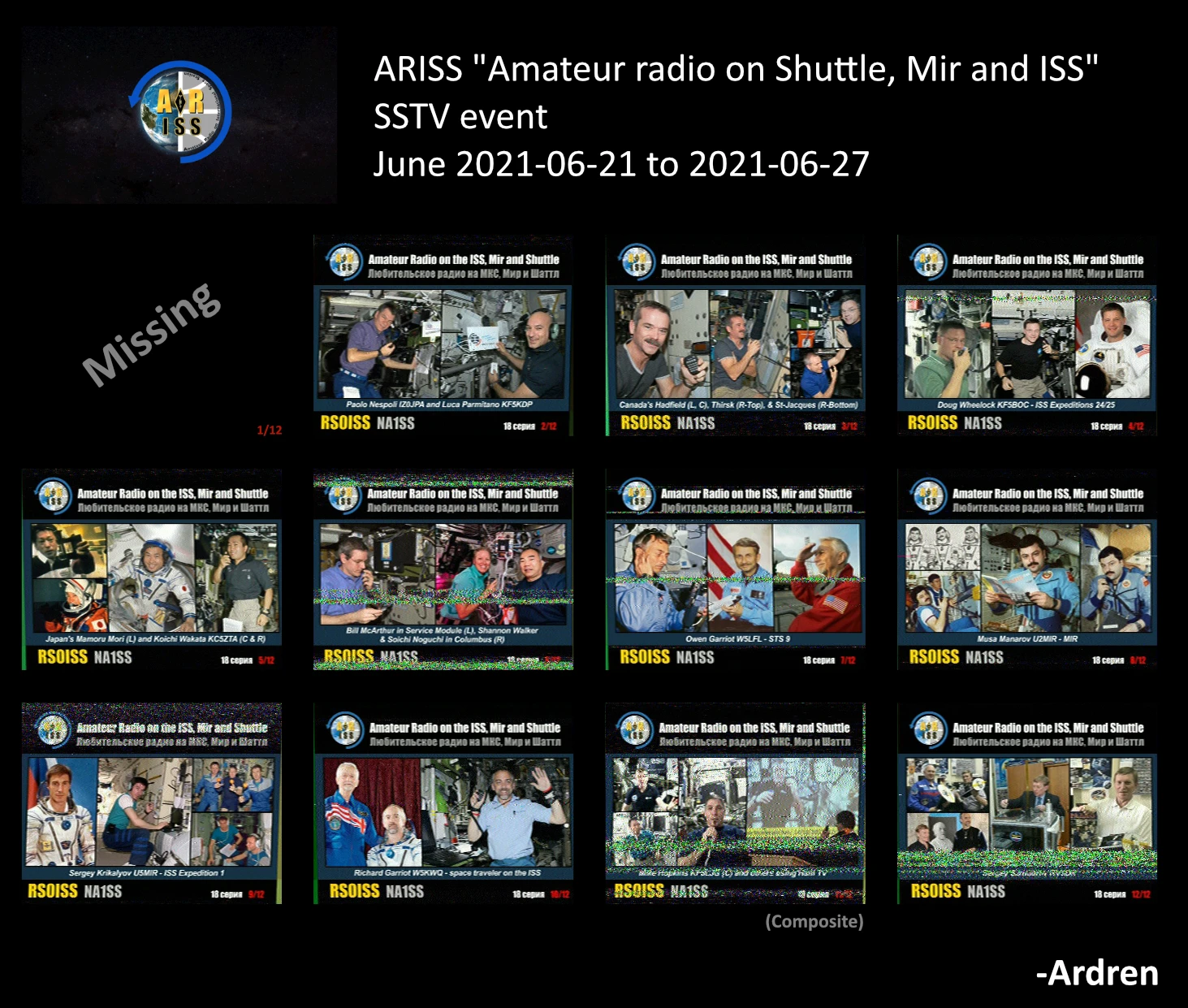
I was able to receive 11 of the 12 images in acceptable quality. Interestingly there must be some funny relationship between the time to send the complete 12 images and and the time is takes for the ISS to orbit the earth as I received a lot of some images, and none or very limited of others.
| Image Number | Times Received |
|---|---|
| 1 | 0 |
| 2 | 1 |
| 3 | 3 |
| 4 | 5 |
| 5 | 5 |
| 6 | 8 |
| 7 | 6 |
| 8 | 8 |
| 9 | 5 |
| 10 | 3 |
| 11 | 2 |
| 12 | 1 |
Overall was good fun, even with a non-optimal high gain colinear.
That signal is actually pretty cool…
I think it’s JORN an OTHR, but it only sort of matches up.
Sometimes there was a preamble before it started, and then it would jump around frequencies a little.
They weren’t evenly spaced, the lowest I was around 6.9753 Mhz to the highest 6.9576Mhz (USB).
Around 10s between bursts too.
Don’t really know what is going on, but this is what I saved:
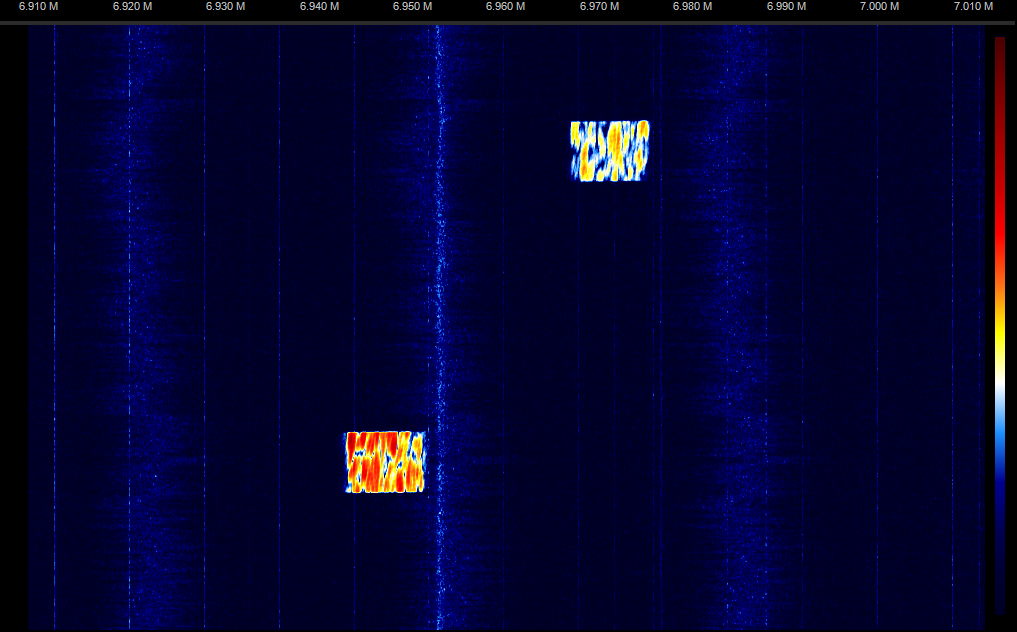
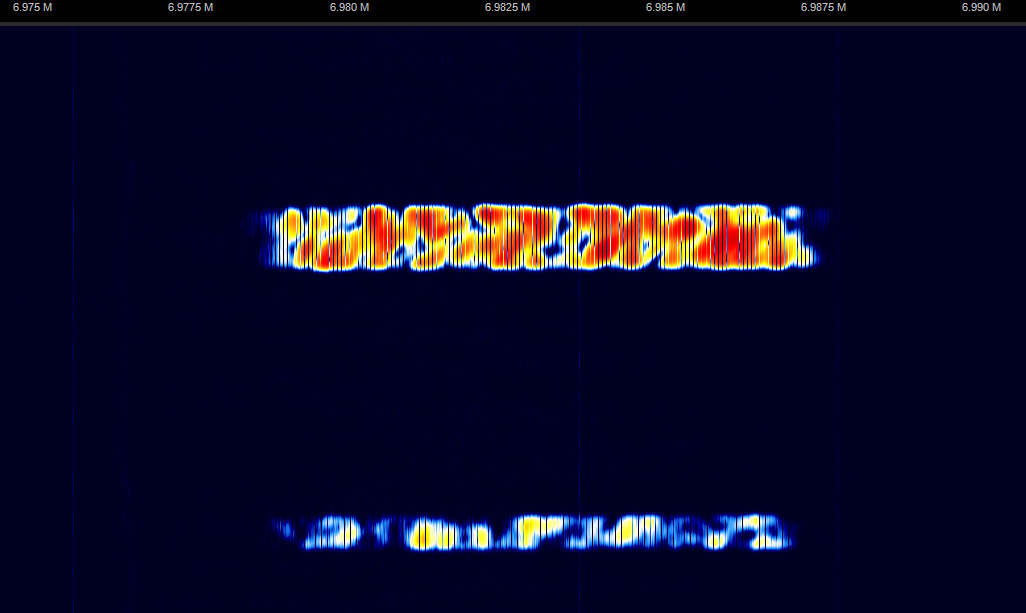
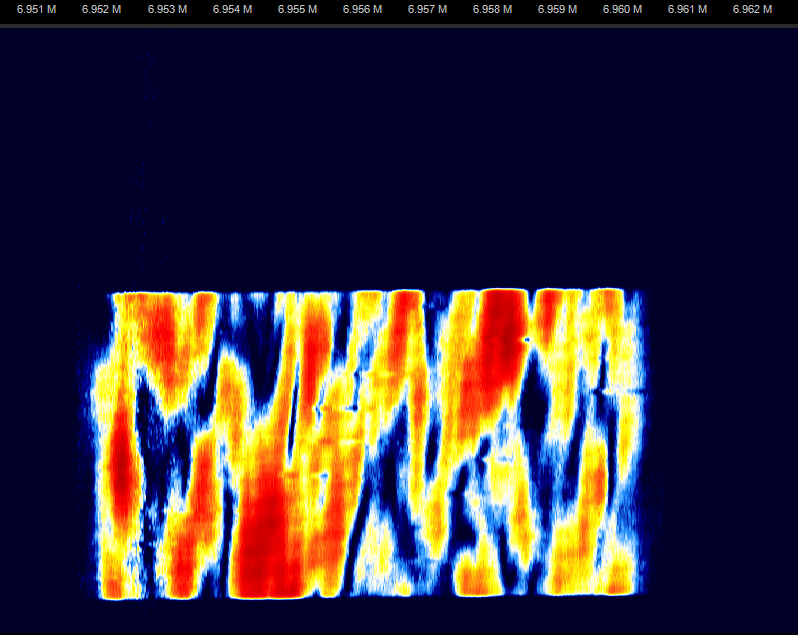
Recording of a single burst (USB).
Update 2021-06-27: The signal is likely from US Navy, not JORN.
I’ve done almost nothing with HF for a while. I’m still demoralized by all the interference.
Turns out the what I was receiving wasn’t related to power supply… Or anything else I can track down.
This is what I receive on 40m with a Discone (VHF/UHF) and a Airspy HF+ Discovery.
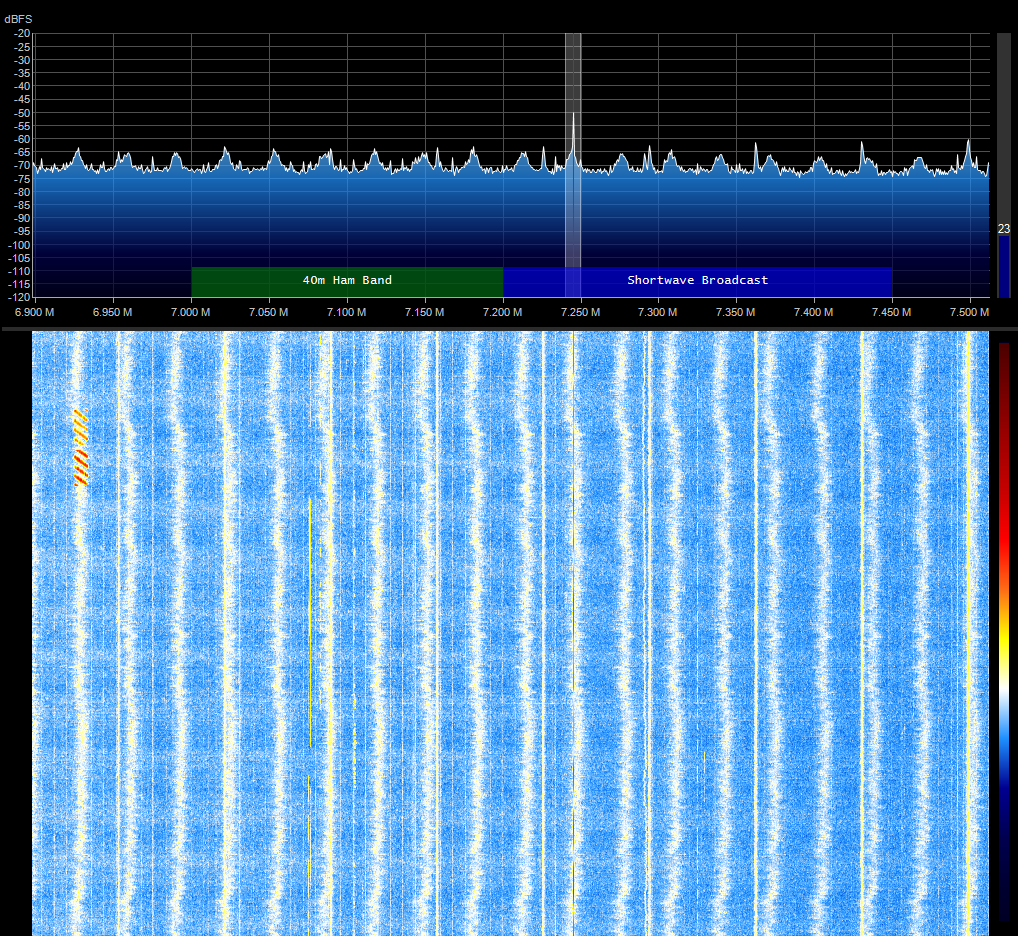
Can just see FT8 at 7040Khz. And there is a cool looking signal at 6950Khz too.
Finally got a laptop last week. If I can replicate the interference with a small antenna I might be able to get an idea where it’s coming from.
A little more work on my magnetic loop antenna.
I switched from using a Wifi stepper to a little high torque 12v DC motor + gearbox. I really liked the Wifi Stepper, it was painless to setup and use. It was exactly what (I thought) I wanted. Unfortunately I couldn’t get enough torque at low RPM with the little steppers I had. My variable capacitor has much to large a range, and needs very fine adjustments.
I don’t know how much torque the DC motor + gearbox actually has, but it feels like a lot. Another bonus was that the motor, gearbox, and a nice PWM controller was $30 AUD from Banggood.
For testing with my SDR I also switched to using a short coax cable and a long (powered) USB cable. I don’t think I’ve seen such a clean FT8 waterfall on my PC before. There is still some RF (right next to 7.074) but it’s night and day really.
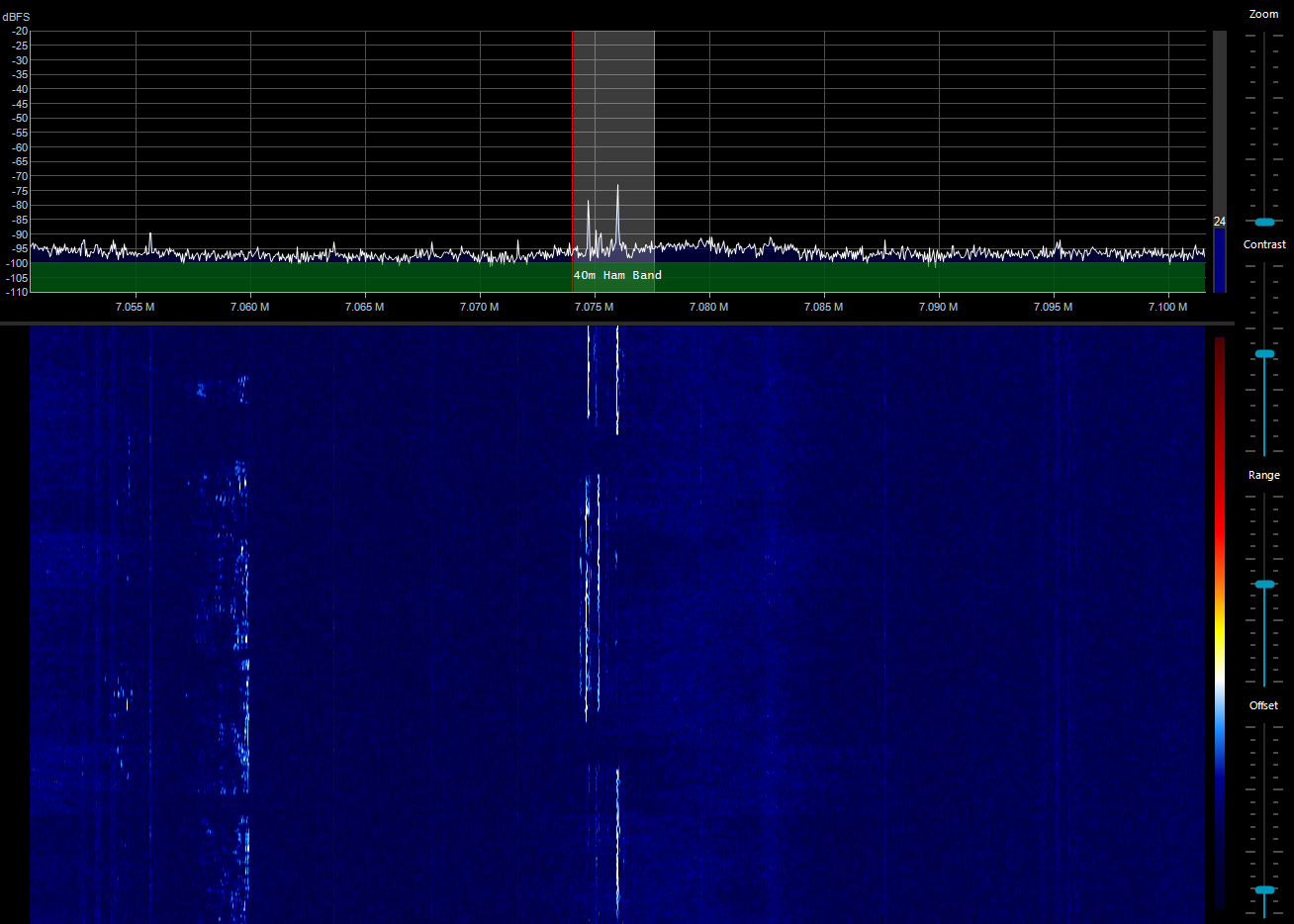
Still, no idea if I can actually hear any better, but it certainly looks clearer.
My next plan is to switch to a shielded coupling loop. Right now, it’s just a few strands of copper wire twisted together in a rough loop. I found a nice piece of cable to use a while ago, but my soldering iron couldn’t heat the large solid conductor. I bought a Chinese T12 solder iron from Banggood that should have plenty of power.
For my other noisy project, I’m pretty sure it’s USB switch mode noise. Yay.
New toy, cheap antenna, and an expensive power supply.
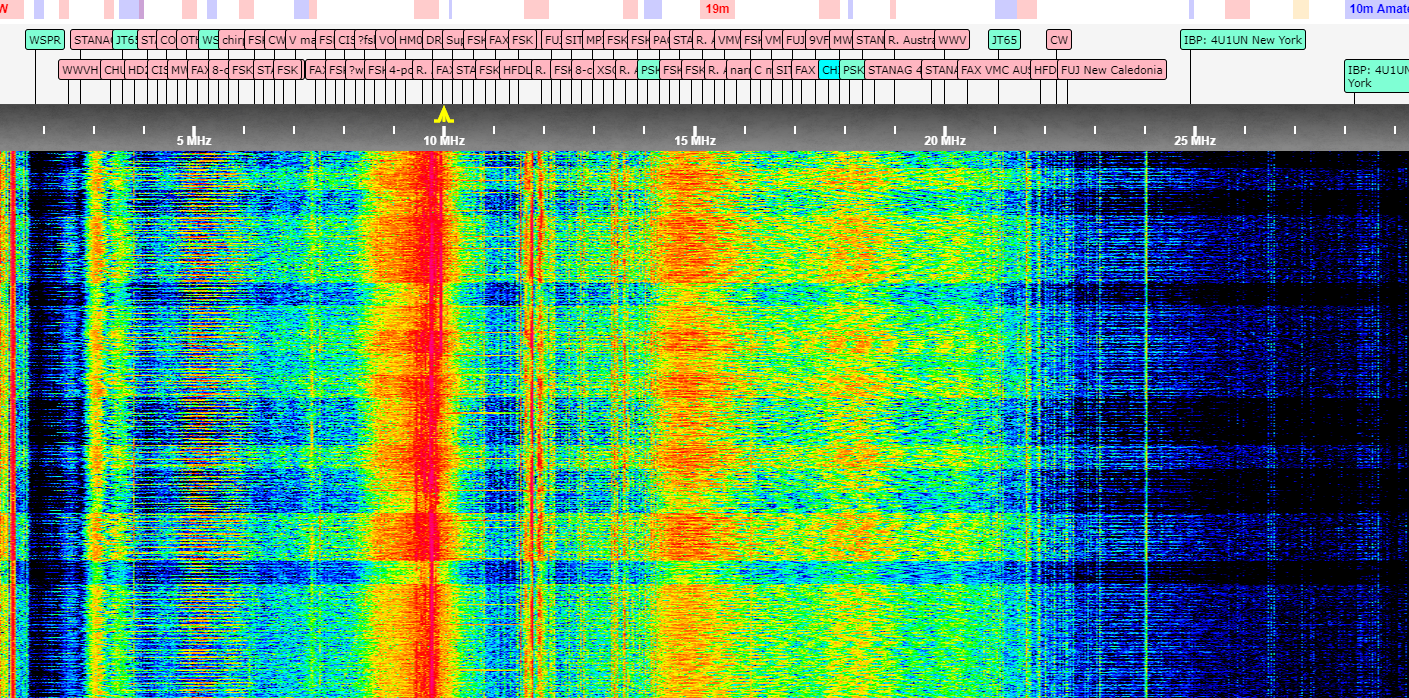
(1.5MB png. Noise doesn’t compress well)
Viewing the whole 0-30mhz shows some, ugh, noise.
I said this was meant to be a place where I could look back on. So, here’s my new Necrodancer Cadence PB of 10:40.84 from 2021-01-14.
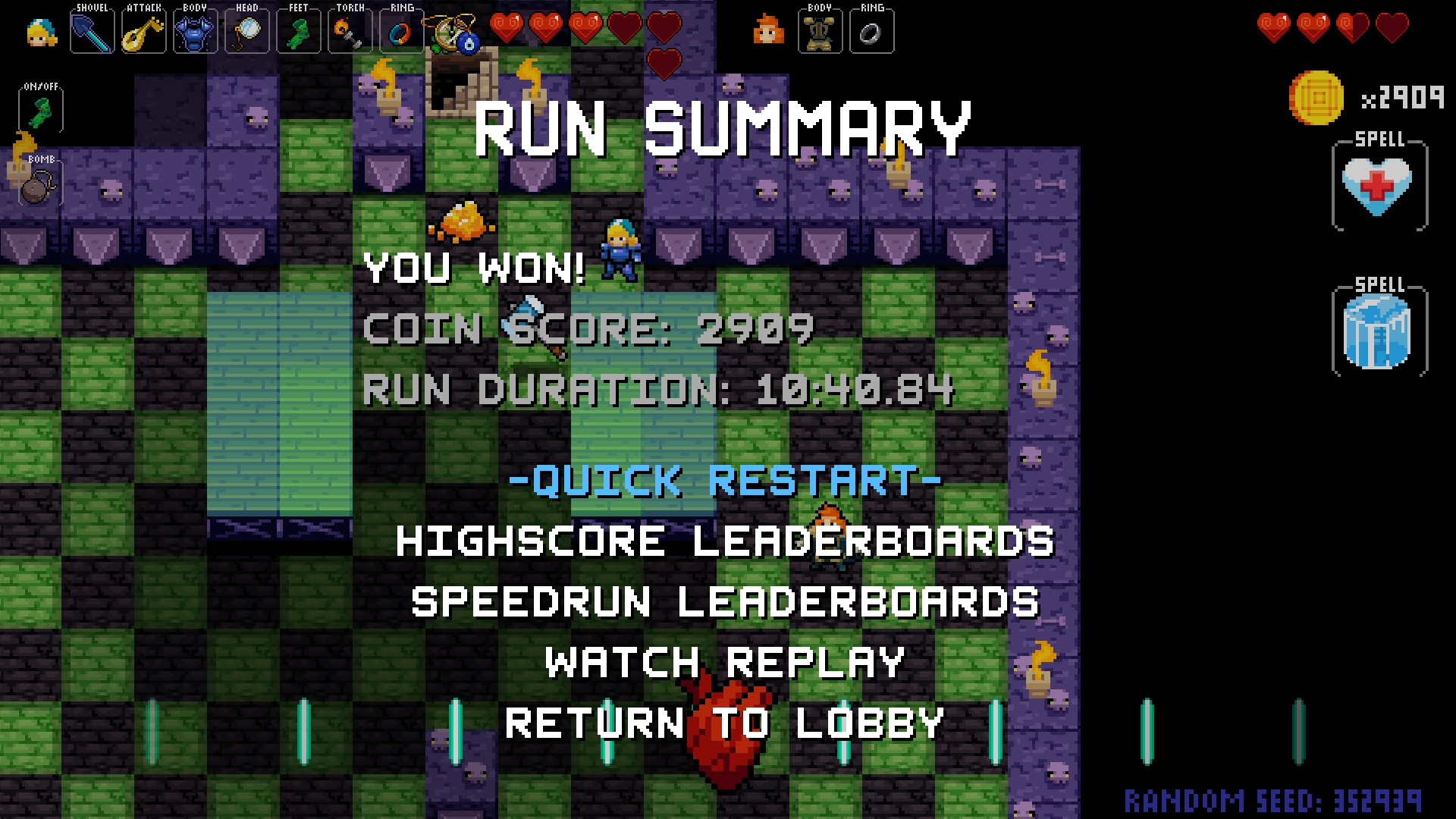
Something like 1:20 faster than my last run.
I got an amazing Dead Ringer quick kill (without knowing what I was doing, it just somehow worked) and then Boots of Leaping made a very fast Necrodancer kill too. It was a very lucky run.
I wish the replays didn’t always desync.